
“Words are fine, but unless they are lived, they are just wind. The dance makes the truth of the heart a reality in the feet.”
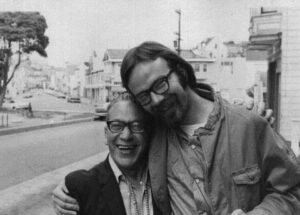
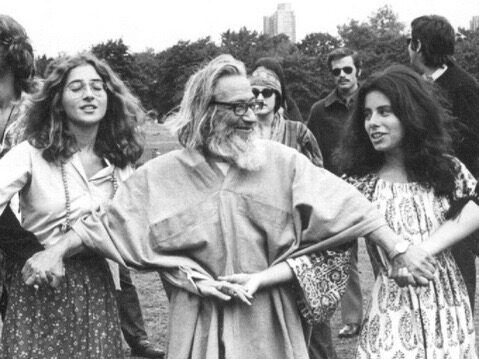

Born in San Francisco, Samuel L. Lewis was a gardener, botanist, and mystic who dedicated his life to the vision of “peace through the arts”. Despite his later role as a spiritual leader, he originally took up folk dancing simply to overcome a deep sense of shyness—an experience that gave him a first-hand understanding of the transformative power of movement.
The Influence of Lineage
Throughout his life, Samuel studied mystical and spiritual forms of dance with the legendary Ruth St. Denis. He was also a primary disciple of Hazrat Inayat Khan, whose teaching on the “Unity of Religious Ideals”—the belief that the truth at the heart of all religions is the same—became the cornerstone of Sam’s work.
Embodying the Truth
Envisaging a way to bring these lofty ideals to life, he developed a dance form that would allow people to move beyond intellectual concepts and directly experience states of joy, peace, harmony, and unity for themselves. He believed that for spiritual realisation to be genuine, it must be “the word made flesh,” felt within the body and expressed through the heart.
“Murshid SAM on complexities of human mind: ‘A concept of spirituality has nothing to do with spirituality.'”
— Murshid Samuel Lewis
Meditation
For Murshid Samuel Lewis (Murshid Sam), meditation was never a retreat from the world, but a vibrant attunement to Reality through presence and action. He rejected the notion of meditation as a purely mental or inward escape, insisting instead that it must be an embodied experience—integrating the breath, heart, and body through movement, sound, and dance. Central to his teaching was the belief that breath serves as the bridge between the finite and the infinite, and that any practice devoid of love and service remains incomplete. Ultimately, for Murshid Sam, true meditation is not a forced conquest of the mind, but a receptive state of surrender that flowers into kindness, refined relationships, and a profound harmony with all of life.
A Global Legacy of Peace
Affectionately known as Murshid Sam, he saw the Dances as a way of sharing the blessings of peace within each individual and throughout the world. Since his passing in 1971, his vision has flourished; the Dances have spread globally and are now used in a remarkable variety of settings, including:
Spirituality: Conferences and ecumenical worship.
Healing & Transitions: Hospitals, prisons, healing rituals, and burials.
Community & Celebration: Schools, weddings, blessing ceremonies, and peace gatherings.
“Peace is not an idea; it is a state of being. You cannot think your way to peace, but you can dance your way into it.”
More links to learn about Murshid SAM
- Sufi Ruhaniat International: The most comprehensive source for Murshid Sam’s life, including his diaries, essays on the “Garden of Inayat,” and his various initiations.
- Dances of Universal Peace International: Specifically focuses on his role as the originator of the Dances, providing context on how the movement grew from 1960s San Francisco to a global practice.
Books to read
- Sufi Vision and Initiation: Meetings with Remarkable Beings: a profound journey through the diaries and direct realizations of Murshid Samuel Lewis.
- In The Garden with Murshid Sam: a compendium of stories, biographical elements, and writings of Murshid Sam
- Murshid: A Personal Memoir of Life with American Sufi Samuel L. Lewis by Mansur Johnson