
“The soul is a divine spark, and when it is set on fire, it becomes a light that illuminates the path of others.”
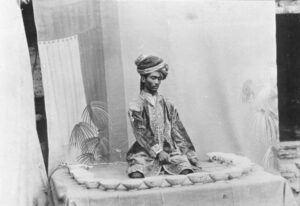
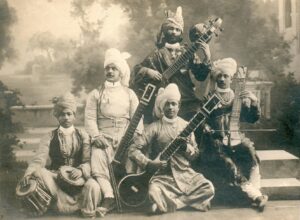
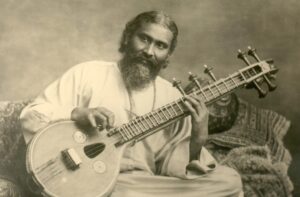
Hazrat Inayat Khan was a visionary Indian mystic, philosopher, and virtuoso musician who played a pivotal role in introducing Sufi teachings to the Western world. He was the founder of the Sufi Order of the West (now the Inayatiyya) and provided the essential spiritual and philosophical framework upon which the Dances of Universal Peace were later built.
The Message of Spiritual Liberty
Inayat Khan’s central teaching was the “Unity of Religious Ideals.” He proposed that while religions differ in their outward forms, rituals, and names, they all drink from the same fountain of divine truth. He taught that “Sufism” was not a closed sect, but a path of spiritual liberty aimed at bringing together a divided humanity through the “Religion of the Heart.”
“There is no greater scripture than the manuscript of nature, and no greater religion than the religion of the heart.”
Music as a Path to God
As a master of the Vina, Inayat Khan believed that sound and rhythm were the most direct means of touching the soul. He taught that the entire universe is composed of vibrations, and that through music and sacred phrases, a person could harmonise their own being with the divine. This concept of “The Mysticism of Sound” is exactly what allows DUP practitioners today to experience deep shifts in consciousness through simple chanting.
More links to learn about Hazrat Inayat Khan and Universal Sufism
- Sufi Ruhaniat International: This page explores his life and his role as the “Pir-o-Murshid” (spiritual guide) who brought the Sufi Message to the West, emphasizing the lineage that flows directly through Murshid Sam to the Dances today.
- The Inayatiyya: A deep biography and an overview of his “Message.”
- The Wahiduddin Archive: An incredible resource for the complete works of Inayat Khan, including his 14 volumes of teachings (The Sufi Message).